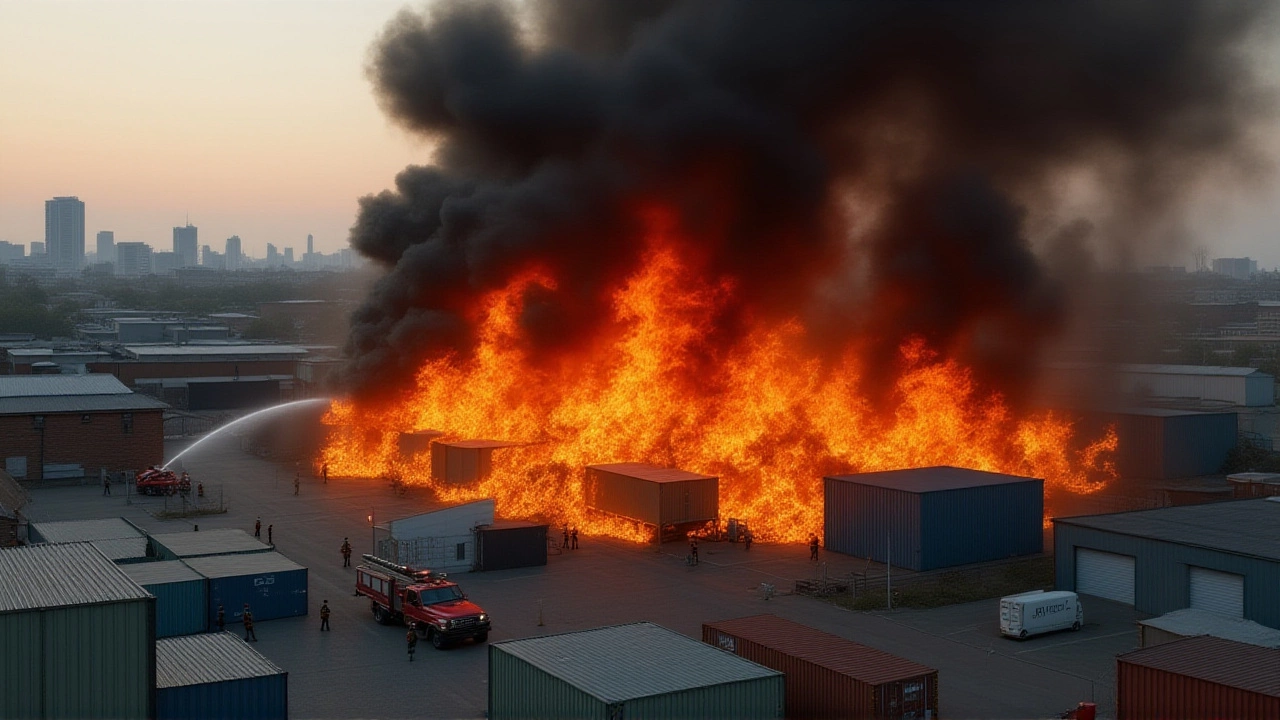
A deafening series of explosions ripped through a warehouse on Bridge Road in Southall, west London, just before 9:00 AM on Tuesday, November 25, 2025, sending plumes of black smoke across the neighborhood and turning the quiet industrial stretch into a scene straight out of a war movie. Within minutes, the London Fire Brigade declared a major incident — their highest alert level — after receiving over 50 emergency calls reporting flames and detonations. Roughly 150 firefighters and 25 fire engines poured into the area, battling a blaze that had already consumed 75% of a two-story warehouse and retail unit, all while volatile fireworks and gas cylinders continued to explode unpredictably.
What Happened on Bridge Road?
The fire began in the early morning hours, when the first alarms rang out from the warehouse, a nondescript building tucked between auto repair shops and Asian grocery stores. Witnesses say the initial flames were quickly overtaken by violent bursts — not just one or two, but a relentless chain of explosions that shook windows blocks away. One resident, Shane, who spoke to Financial Express midday on the 25th, described it as "insane." "It’s been going on since just before nine," he said. "The firefighters are working hard, but they don’t seem to have any control. Every time you think it’s calming down, another boom hits. It sounded like a war zone. I’ve never heard anything like it." The London Fire Brigade confirmed the warehouse was storing pyrotechnics and compressed gas cylinders — a dangerous combination that violates UK safety codes for commercial storage. The presence of these materials forced crews to adopt a defensive strategy: they couldn’t approach the heart of the fire without risking catastrophic secondary blasts. Instead, they focused on containment, cooling adjacent structures, and preventing the blaze from jumping to nearby businesses.Why This Was So Dangerous
Most warehouses in Southall store everything from electronics to textiles. But this one? It was a ticking time bomb. Under UK regulations, fireworks must be stored in certified, fire-resistant bunkers with strict limits on quantity and proximity to other hazardous substances. Gas cylinders require ventilation, isolation, and temperature controls. Yet, according to sources familiar with the site, the warehouse had no visible safety signage, no fire suppression systems in the storage area, and no clear separation between the pyrotechnics and the propane tanks. "This isn’t just negligence — it’s a systemic failure," said retired fire officer David Mendez, who spent 28 years with the London Fire Brigade. "You don’t store fireworks next to gas. Not even in a commercial zone. The fact that this went unnoticed for months, maybe years, is terrifying." Footage from METRO TV and Financial Express showed flames leaping 40 feet into the air, with debris raining down on the street below. At one point, a nearby delivery van caught fire from flying embers. Emergency crews evacuated two adjacent buildings, though no official count of displaced residents was released. The London Fire Brigade confirmed no injuries were reported — a miracle, given the scale.The Aftermath and Ongoing Risks
By late afternoon, the fire had burned itself out in parts of the warehouse, but the danger wasn’t over. With dozens of unexploded fireworks still smoldering inside the charred remains, and gas cylinders potentially compromised, firefighters remained on-site overnight. Specialized hazardous materials teams arrived to assess structural integrity and safely remove unexploded ordnance. The London Fire Brigade warned that even minor disturbances — like a falling beam or a sudden temperature shift — could trigger another explosion. "We’re treating this like a bomb site," said a senior incident commander, speaking off-record to The Daily News Now. "We don’t know how many charges are still live. We’re not going in until we’re certain it’s safe." Local authorities have cordoned off a 200-meter radius around the warehouse. Residents were told to keep windows closed due to airborne particulates from the smoke, which contained heavy metals and toxic chemicals from the burning fireworks. Environmental agencies are now testing soil and air quality in nearby schools and homes.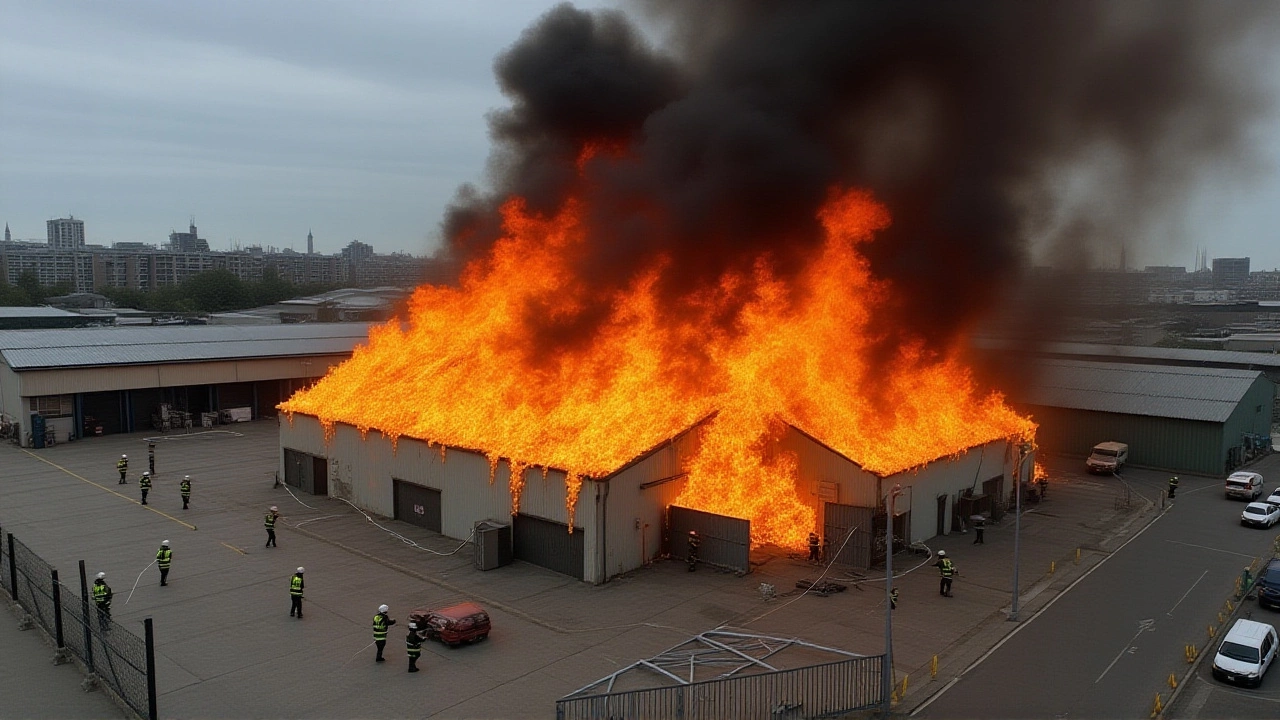
What Comes Next?
The London Fire Brigade has handed the investigation over to the Health and Safety Executive (HSE) and Metropolitan Police Service. Investigators will examine warehouse permits, inspection records, and employee logs. Was this a one-off lapse? Or part of a pattern? Southall has seen a surge in small, unregulated warehouses over the past five years, many operating under the radar of local authorities. "This isn’t the first time we’ve found fireworks in commercial units," said HSE spokesperson Emma Li. "But it’s the first time we’ve seen this level of risk compounded with gas storage. We’re going to be auditing every warehouse in Ealing that’s flagged for hazardous materials." Meanwhile, the community is left wondering how this happened — and whether it could happen again. Local councilor Rajiv Mehta told reporters: "We’ve raised concerns about these warehouses for years. The planning department approved them because they’re ‘industrial.’ But industrial doesn’t mean dangerous. And we failed to enforce the rules."Why This Matters Beyond Southall
This fire isn’t just a local tragedy. It’s a warning shot to every city where zoning laws have blurred the line between commercial convenience and public safety. In Manchester, Birmingham, and Leeds, similar warehouses store fireworks for Diwali, Halloween, and New Year’s — often in buildings not designed for it. The UK’s fireworks industry is worth over £300 million annually, and much of it is distributed through small, unregulated depots. The London Fire Brigade has already begun reviewing its protocols for responding to pyrotechnic fires. They’re drafting new guidelines for how to approach such incidents — including when to evacuate entire blocks, and how to coordinate with bomb disposal units. "We’re lucky no one died," said firefighter captain Priya Nair, who led the response. "But luck shouldn’t be our only defense."Frequently Asked Questions
Why were fireworks and gas cylinders stored together in a warehouse?
UK regulations strictly prohibit storing fireworks and gas cylinders in the same area due to the extreme risk of explosion. The warehouse on Bridge Road appears to have violated these rules, likely to cut costs or avoid inspections. Authorities are now investigating whether the owner falsified storage permits or ignored safety audits. Similar violations have been found in other parts of London, but rarely with such deadly consequences.
How did the fire start?
The exact cause remains under investigation, but early evidence suggests an electrical fault in the warehouse’s aging wiring may have ignited nearby flammable materials. Investigators are also examining whether improper handling of fireworks during loading or unloading triggered the initial blaze. No signs of arson have been found, but the warehouse’s lack of surveillance cameras complicates the probe.
Were residents evacuated?
Yes, two adjacent buildings were evacuated during the peak of the fire, though no official number of displaced residents was released. Local schools within a 300-meter radius remained open but instructed students to stay indoors. The London Fire Brigade advised residents to keep windows closed due to toxic smoke. As of November 26, most families were allowed to return, but the cordon around the warehouse remains active.
What’s being done to prevent this from happening again?
The Health and Safety Executive has launched a surprise audit of all 147 registered hazardous materials warehouses in the London Borough of Ealing. New rules are expected by January 2026, requiring real-time temperature monitoring, mandatory CCTV, and quarterly inspections. The London Fire Brigade is also training specialized units to respond to pyrotechnic fires — something they previously lacked.
Is Southall at risk of more fires like this?
Unfortunately, yes. Southall has over 80 commercial warehouses, many operating in gray areas of planning law. Several have been flagged by residents for storing chemicals, batteries, and fireworks without permits. This fire exposed a systemic blind spot: local councils prioritize economic growth over safety enforcement. Without stronger oversight and penalties, another incident is likely — possibly sooner than anyone expects.
Why weren’t inspections done sooner?
Ealing Council’s safety inspection team has been understaffed since 2021, with only three officers covering 200 industrial sites. Inspections are scheduled annually, but many warehouses operate without permits or evade detection by changing names or owners. The warehouse on Bridge Road had been flagged in 2023 for storing excessive quantities of chemicals, but the case was closed due to "lack of evidence." That’s now under review.